
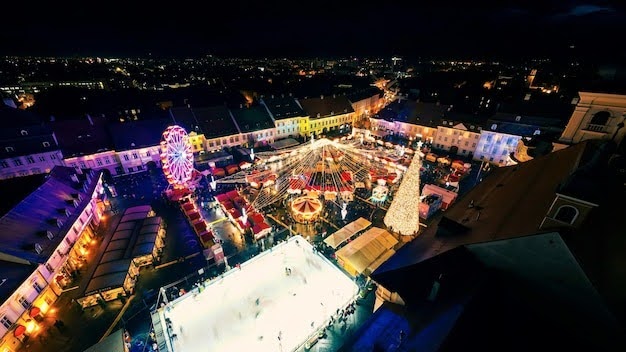
Outdoor gatherings feel welcoming when lighting does more than brighten a space. Thoughtful aerial lighting defines activity areas, creates atmosphere, guides guests, and makes a venue memorable. Overhead illumination adds visual interest. A good design balances beauty, visibility, comfort, and safety. Choose outdoor-rated fixtures, plan carefully, and use qualified professionals for elevated installations.
1. Create a Canopy of Warm String Lights
Warm string lights make large gatherings feel intimate. Suspend outdoor-rated strands between approved structures or purpose-built poles in parallel lines, zigzags, or starburst patterns.
This aerial lighting suits dining tables, reception areas, and courtyards, creating a welcoming ceiling. Keep strands high enough for safe movement, and ensure supports can handle the equipment and expected weather.
2. Highlight Key Areas with Suspended Lanterns
Lanterns add character and help guests recognize important spaces. Hang matching fixtures above lounge corners, welcome areas, or dining zones, following a planned layout. Choose durable outdoor-suitable designs and consistent light tones.
Aerial lighting makes focal points visible across a venue, but avoid glare. Battery-powered or low-voltage options may simplify layouts when used according to manufacturer instructions.
3. Use Color to Build an Event Atmosphere
Color transforms an outdoor celebration. Soft amber or warm white suits formal dinners, while selected colors support festival themes or seasonal parties.
Use programmable fixtures to shift scenes between arrival, dinner, speeches, and dancing. This aerial lighting approach adds variety while keeping the design coordinated. Test after dark because buildings, trees, and nearby lights can alter colors.
4. Add Dramatic Focal Points Above the Crowd
Large venues benefit from overhead features, such as a geometric light frame, illuminated arch, or suspended cluster above a gathering point. These installations draw attention toward a stage or dance floor.
Aerial lighting should complement sightlines, not block them. Ask a qualified rigging team to assess structural capacity, wind exposure, ballast, and safe installation.
5. Combine Decorative Light with Practical Wayfinding
A beautiful venue must also be easy to navigate. Use brighter illumination near entrances, steps, food stations, toilets, and accessible routes, while keeping decorative zones softer.
Mark level changes and protect cables near walking paths. Aerial lighting can distinguish gathering zones, but must not replace emergency lighting, exit signs, or route markers. Check darker edges after installation.
6. Plan for Weather, Power, and Safe Operation
Outdoor conditions change quickly, so choose equipment rated for outdoor use and follow manufacturer instructions. Have a competent electrician assess power needs, moisture protection, connections, and cable routing.
Towers, trusses, and suspended fixtures must suit their loads and wind conditions. Monitor weather and prepare a shutdown plan. Aerial lighting should be inspected before guests arrive and switched off when unsafe.
Final Thoughts
Successful outdoor illumination combines creativity with careful planning. Map the venue and identify guest activities. Decide which areas need atmosphere or visibility, select a consistent style, and test it after dark. Keep emergency arrangements separate from decoration. Use outdoor-rated equipment and competent professionals for electrical work and elevated installations. With planning, aerial lighting makes gatherings distinctive, comfortable, and easier to navigate. Confirm local rules before installation.